Admin Settings
This page is where all the system settings can be handled. The page is divided into expandable sections: Registration Settings (where invites are created), LDAP Settings, Registry Settings, SMTP Settings, Azure VM Settings, Integrations and Admin Notifications.
Registration Settings
Choose to have an open registration or only from invite by switching the toggle. Select the default User Group that new users are assigned to.
Create Invitation Link
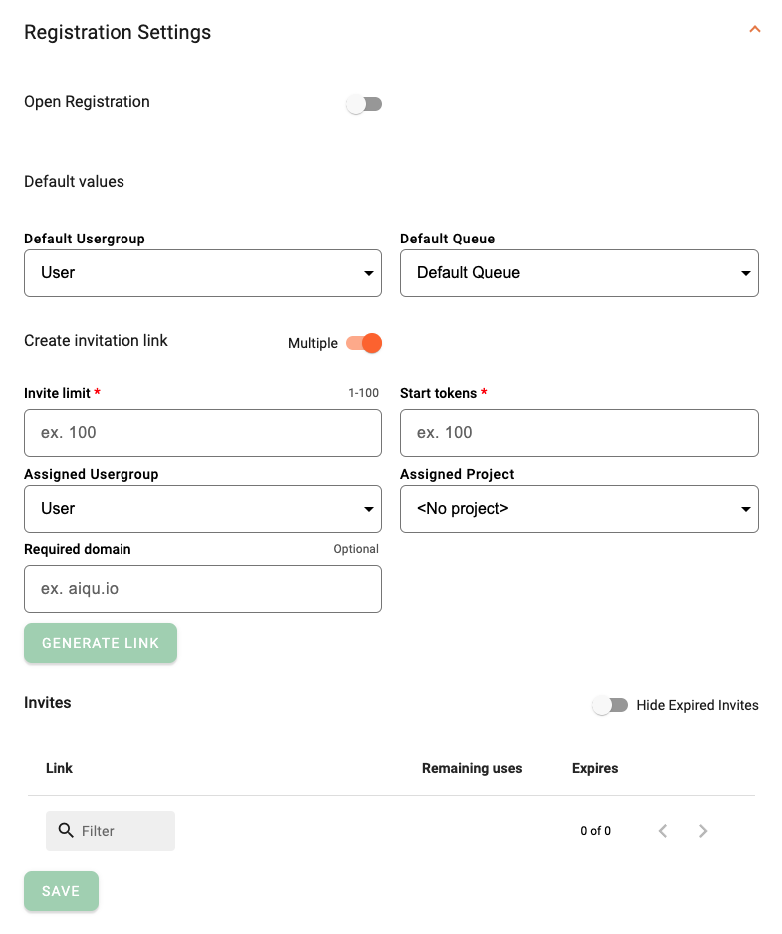
Single/Multiple: Send out an invitation to a single e-mail recipient or create an invitation link that can be used by multiple recipients.
Invite limit: How many times the multiple invitation link can be used.
Start tokens: How many tokens will each new user get from start.
Assigned User Group: Assign default user group for every new user.
Assigned Project: Assign default project for every new user.
Required domain: Registrations are only allowed for e-mail addresses from the specified domain (optional field).
LDAP Settings
Connect AiQu to an external LDAP/Active Directory server for authentication and group synchronisation.
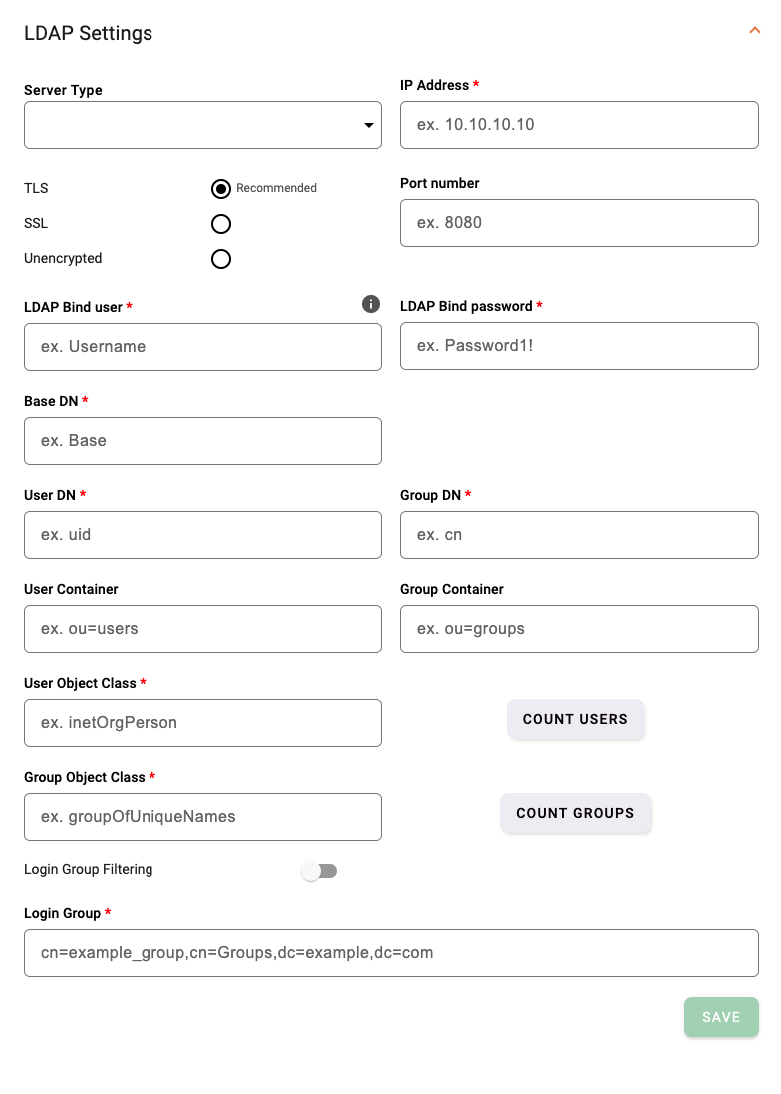
The form contains the following fields:
Server type: Type of directory server.
IP Address and Port: Address and port of the LDAP server (port 1–65535).
Encryption: TLS (recommended), SSL or Unencrypted.
LDAP Bind user / LDAP Bind password: Service account credentials used to query the directory.
Base DN: The base distinguished name to search from.
Domain (optional): The directory domain.
User DN / Group DN: Distinguished names where users and groups are located.
User Container / Group Container (optional): Containers narrowing the user/group search.
User Object Class / Group Object Class: Object classes used to identify users and groups. The Count Users and Count Groups buttons verify the configuration by returning the number of matched entries.
Login Group Filtering: When enabled, only members of the specified Login Group are allowed to log in (the field provides autocomplete lookups against the directory).
LDAP Attributes: A mapping table where directory attributes are mapped to AiQu user fields (entries can be added and removed).
Imported groups are connected to AiQu user groups under Users → User Groups (see the Mapped Groups and LDAP Import features on the Users page).
Registry Settings
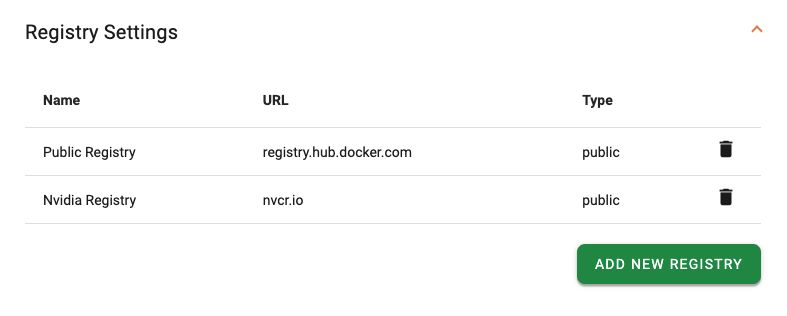
Registry Settings holds all the registries from where containers can be mounted. There are two lists of registries:
Global: contains registries available system-wide, the admin can choose to either make them available or unavailable on their realm depending on the “enable”-toggle.
Realm specific Registries: contains all the registries added by admin.
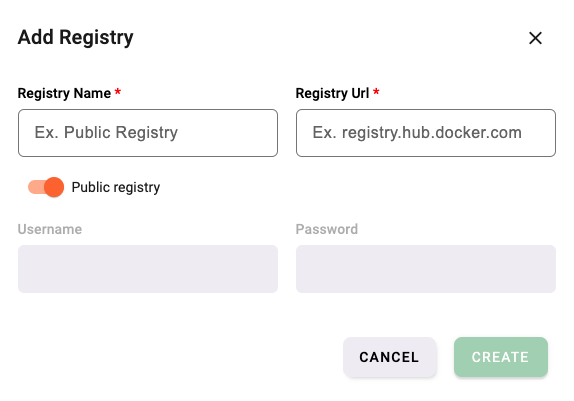
Add Registry
To add a registry, click the button Add Registry and fill out all the fields in the pop-up window.
SMTP Settings
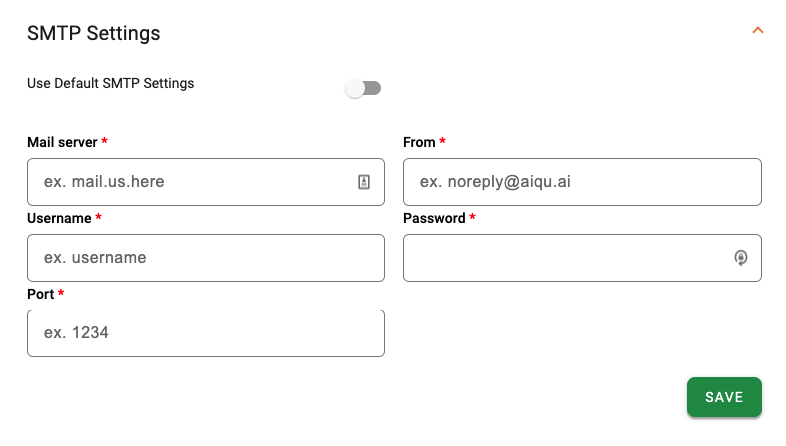
Use of default SMTP settings is set to on by default, to customize theese simply switch the toggle to off and fill out all of the fields.
Azure VM Settings
If the realm runs compute on Azure virtual machines, this section lists the configured VMs under Existing Azure Virtual Machines with their ID, Name, Description and the Nodes each VM provides. Use Add Azure VM Config to register a new VM configuration, click a row to view or edit its details, and use the delete action to remove a configuration.
Integrations
This section enables and configures external storage integrations.
Enable NetApp Integration: Toggle NetApp support for the realm. When enabled, a table of existing NetApp configurations is shown with the Configuration Name, Endpoint and Username.
Add Netapp Configuration: Register a new NetApp endpoint. Each configuration can be deleted from its row.
Once NetApp is enabled, storages can be backed by NetApp volumes — see the NetApp Storage options on the Storage page.
Admin Notifications
Administrators can configure their own notification preferences here (the same notification settings available to users, applied to the admin account). Use this to control which system and administrative events you are notified about.